Monthly Archives: August 2026

Which sectors do we specialise in?

Which sectors do we work across?

We cover all sectors. There is no sector that we can’t create a compelling brand for.

However, this is an interesting question because the answer is that it doesn’t really matter. I’ll explain why.

It’s the strategic process and creativity that it is critical rather than sector-specific experience. It can then be pointed at whichever sector it is.

Much better to get the experts in brand and then apply it to whichever sector. In other words, the top-down approach rather than bottom-up approach. The latter seeing someone who for example vertical sectors the pharma industry and offers everything for it but is expert in none.

That said, we have developed a particular specialism in the food and beverage sector and also the ‘fintech’ area, but in all honesty the principles are exactly the same no matter which the sector is. We could just as easily brand a company making brake discs as one importing coffee or launching a technology business.

Technology
Food & Beverage
Retail & Luxury Goods
The Arts
Financial & Legal
Automotive
And all other sectors too!

What are we experts in? And what aren’t we experts in?

What are we experts in? What aren’t we experts in?

We always say that as a brand start-up you should have a King Arthur’s Roundtable of non-exec directors. And that everyone around that table needs to contribute.

We’ll handle everything that is brand and strategy. But for example, other that establishing the look and feel for it, we don’t actually do day-to-day social media posting. That’s a different set of skills. However we can bring in someone that can do that to sit at the table.

How do we work with clients?

How do we work together?

Many of our past clients have effectively been in the position of having a great business idea but not a way to articulate it. They fit into what we call the ‘we know that we need a brand but don’t really know what one is’ category.

That’s fine. We can sort everything. You don’t even need to give us a detailed written brief (although it’s helpful if you do). We’ve been doing this more years than we’d care to admit to so we’re adept at finding out what we need. Getting to the nub of the challenge quickly. This is done through a series of conversations.

What is the actual brand creation project process?

What is the process?

Here are the key stages of a project.

Initial Consultation.
We offer a free initial consultation and from this we will write a tailored proposal. Upon acceptance we’ll go into a discovery phase.

Discovery.
It’s vital that we get to know your business. We’ve been doing this for more than 20 years so we’re pretty good at quickly understanding the core challenges facing our clients and getting on to the front-foot. We will consider all of the relevant factors that will influence your brand. Having thoroughly undertaken this aspect we then move forward to concepts.

Concept.
3-4 weeks after project go-ahead we will present conceptual ideas. These will be built around one core strategic positioning but a with number of conceptual routes as to how they might manifest. These will show mock-ups of how they will look on key pieces of collateral so that you’ll effectively be looking at 3-4 brands carrying you name. This is also the opportunity for you to get very involved in the creative process and really make your input.

Development
From this point we will select one route to take forward into development. This stage effectively sees us get rid of all the concept ideas that we’re not using and concentrating on refining and polishing the one that we are.

Implementation
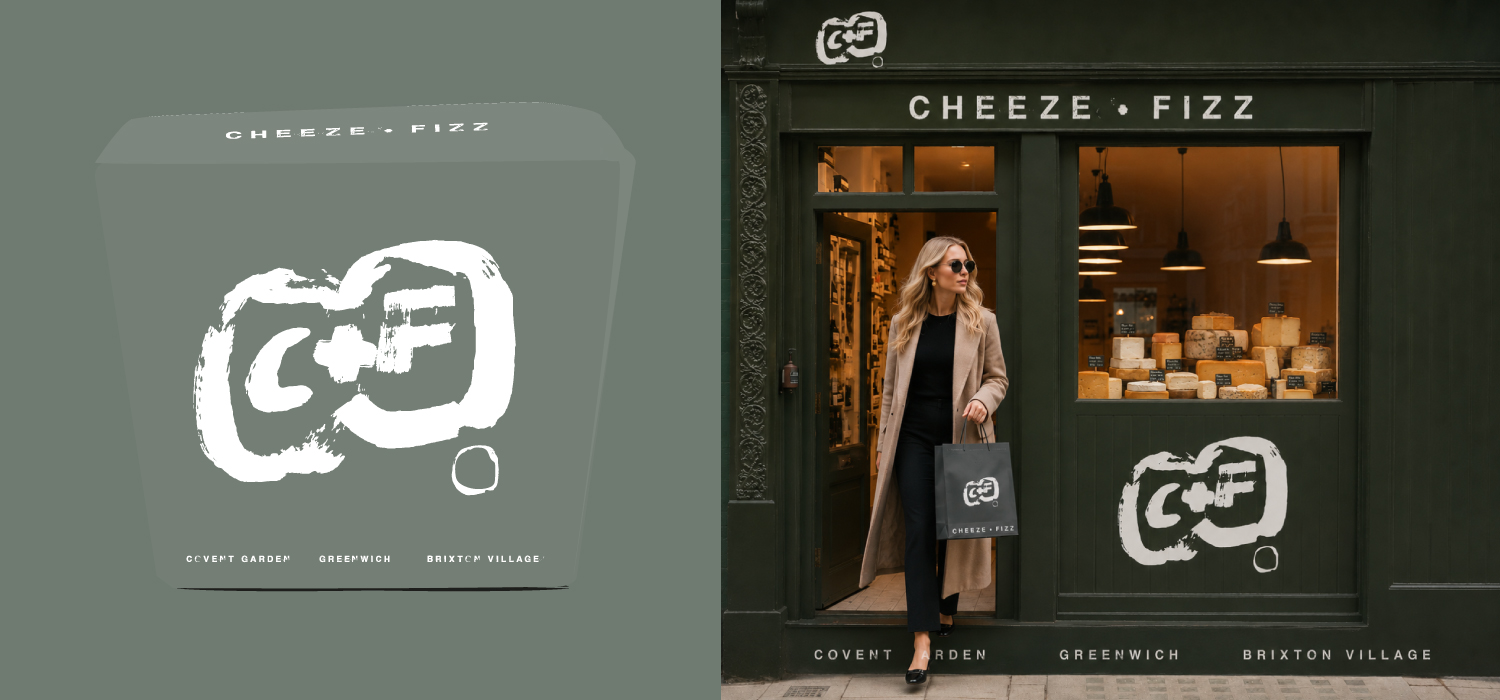
In parallel with the development stage we will be applying the branding to all the items that you’ll need – packaging & print, signage & interiors, website etc – ready for sending to the various producers for production.

Formalisation.
It will then be formalised into brand guidelines. This is an important document that encapsulates the whole project. It is something that has value in two ways. Firstly you will have a visually impressive document that says ‘this is our brand’ that you can use with investors or potential landlords. Secondly you can use to brief other contractors moving forward.

Timescales.
A normal brand project takes 2-3 months, or possibly longer depending upon its complexity – particularly if there is the interior fit-out of a bricks and mortar space to take into account.

Naming.
If we are also asked to also generate naming ideas this will build in additional time at the front of the project to allow for generating an ideas shortlist and also for independent trademark checking.

What type of businesses do we work with?

Who do we work with?

We work with both start-ups and established businesses. They tend to be SMEs. In our opinion the most exciting businesses are start-ups. Look at the sheer amount of the super successful well-known brands out there that have launched from leftfield over the last 10 years. In our eyes small is beautiful!

Start-ups.
We specialize in creating brands for start-ups. We love that culture. It’s a perfect cultural fit for us. You’re a small, agile team and so are we.

In other words, we reflect back to you. By that we mean that as a start-up won’t you don’t need is a big agency (with all the inherent overhead / fees that that implies) sending a bag handler out to report back to the creative team and back again. What you’ll need is common sense incisive thinking from the creative team. Branding is all about common sense, not obfuscation!

Established Businesses.
If you’re an established business looking for a brand refresh or rebrand that’s fine too. The principles are exactly the same as with creating a start-up brand. The only additional area for us to consider is how we carry over any visual and brand equity that you have into the new branding.

What services do we provide?

What services do we provide?

We can start with a clean sheet of paper, come up with the name, define the brand, write its story, create its identity and then design every element that it needs through from packaging to interiors, clothing through to website.

Our core business is brand creation. That splits into two parts.

Brand Proposition
That is to say, starting from a clean sheet to define, create and articulate the following:

Brand Naming
Brand Positioning
Brand Vision & Mission
Brand Values & Culture
Brand Personality & Tone
Brand Story
Brand Identity (logo / wordmark, fonts & typography, colourways, style of photography and iconography).

Brand Implementation
Applying the brand proposition to the collateral that the business requires such as:

Packaging
Building Signage
Interior Design
Team Clothing
Stationery
Presentations
Website

What actually happens during a brand creation project?

What actually happens when you engage us to create your brand?

Hi, I’m Paul, Creative Director at ZutAlors Brand+Identity. Let me talk you through the process that we follow when we take on your brand creation project.

A brand project can be broken down into two key areas: Brand (the noun) and Branding (the verb). In other words, sorting the strategic elements of your brand – such as what it’s going to be known for, how it acts, how it talks and the face that it shows to the world – before applying it to the collateral that it needs to be applied to – such as packaging, buildings, clothing, website and social media etc.

This is the core difference between a true strategic brand project and just a tactical project where a graphic designer puts a logo onto bits and pieces.

We’ll spot the space into the market place where your brand could fit and then we’ll create it for you. It means that you can relax and let us do the whole thing for you.

But first, in order to create your brand we need to undertake the following…

THE DISCOVERY STAGE.
Our first job is to find out about your business. We are looking to answer questions such as:

What does your particular business landscape look like – and, most importantly, what space do you want to ‘own’ within it?

What are your business’ hard and soft goals?

Who are you selling to, or wishing to create a dialogue with?

Which assets can you leverage in order to achieve your business’ goals?

What medium are you selling through? In other words, what is your route to market… is it online or through bricks and mortar retailers, or both?

The answers to these will fuel how we approach the next stage of the brand process.

THE BRAND CREATION STAGE.
Once we understand your business we’ll then map out the core pillars of your brand.

Brand Vision & Mission.
What is it going to become ‘famous’ for?

Brand Values & Culture.
How will it act as it sets out to achieve its Brand Vision & Mission.

Brand Tone & Personality.
Perhaps the most pervasive part of the brand. The bit that will allow it to really connect meaningfully with its target audience.

Brand Identity.
What ‘face’ will it show to the world. This starts with the Brand’s logo but the logo sits at the tip of the iceberg. All the other visual elements that wrap around it will combine to create a compelling visual narrative. These will include fonts and how they come together in typography, colourways, style of photography and also any supporting iconography.

THE BRAND IMPLEMENTATION STAGE.
Having defined all of the above we are then ready to apply them to the brand collateral that your business requires. This is likely to include all or some of the following.

Packaging Design
Building Signage Design
Interior Design
Branded Clothing Design
Website & App Design
Social Media Design
Stationery, Document & Presentation Design

ZutAlors Brand+Identity exists to help exciting business start-ups launch with a powerful brand.

We’re effectively a brand creation A-Team. A brand creation hit squad. Tell us your business challenge and we’ll create a kicking brand for it.

We’re the Brand creation A-Team!

ZutAlors Brand+Identity exists to help exciting business start-ups launch with a powerful brand.

We’re effectively a brand creation A-Team. A brand creation hit squad. Tell us your business challenge and we’ll create a kicking brand for it.

The problem with going to a big brand agency is that unless you have a wheel-barrow full of money they just won’t be interested. Yet the most exciting businesses are start-ups, who generally don’t have a wheel-barrow full of money to spend on getting their brand designed. What they do have though is a wealth of ideas and most importantly a vision of where they want to be.

That’s where we come in. We set up in 2006 with the mission to help business start-ups have the best brand that they can possibly have.

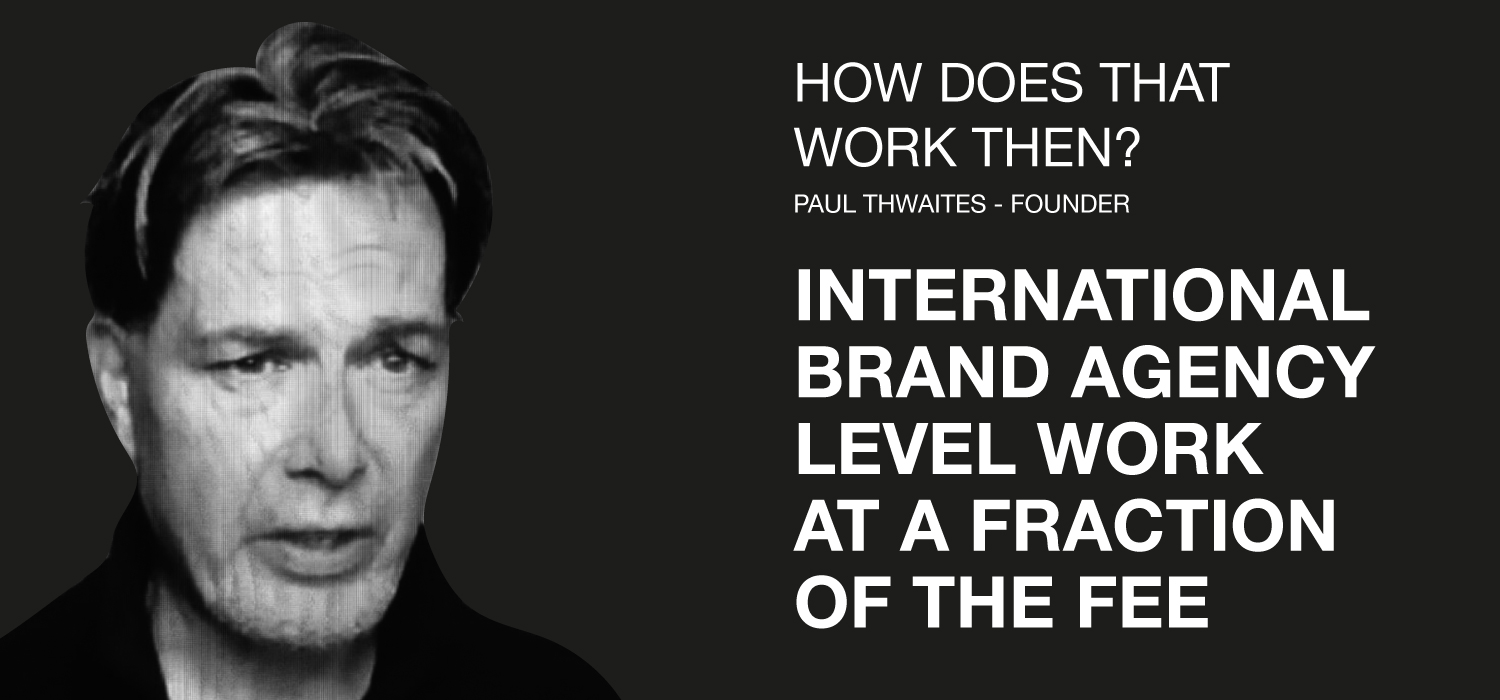
We’re a small team of ex-international brand agency people. We work to the same creative standards as an international brand consultancy because we’re the same people that you’d find in one. But because our overheads are lower it allows us to deliver at a fraction of the price.

We say that it’s our job to make our clients look like they’ve spent tens times more on their brand than they actually have. And we succeed. Just look at our portfolio within the Work section of this site. Their budgets will almost certainly have been a lot less than you’d think.

So if you’re looking to create a powerful brand for your brand start-up contact us now at ZutAlors Brand+Identity.

The Common Sense Approach To Creating A Brand. If You’re a Start-Up You Must Read This.

So, you’re a budding start-up.

You’ve got a big idea and apotentially great product – you know it will fly if you could just get people as enthused about it as you are. Therefore, based on the adage that a strong brand is built on an engaging proposition backed up by a great experience, you’ve got exactly half of what you need for success. What you don’t have is the stunning brandproposition.

You know that you need to tackle the dreaded B word but where to start? Money’s tight and one thing you know for sure is that at this early stage in the growth of your business you can’t afford a big consultancy. If that’s the case, I hope these few words help…

I’ll start by saying that branding isn’t, or shouldn’t be, a black art. It’s not all about
paying a band of expensive consultants to go off and ruminate for a couple of months and then deliver back a tome that makes a thwack on your desk directly commesurate with the the size of your wallet. It can, and should, be a lot simpler.

Let me go as far as to say that if you can’t write the essence of your brand on the palm of your hand you’ve probably got something wrong. Because if you have to reach inside your pocket for a prompt-sheet it means that you won’t have ‘got it’. And if you haven’t got it nobody else will either.

So what is it that should be written across the palm of your hand?

Well ,firstly, use a cross to divide it up into four sections. That’s because this is the number of things that you’ll need to articulate – no more and no less – for your own benefit and that of everyone your business will come into contact with. Everything else, no matter how important, falls in behind to support this core proposition.

In the top left hand quadrant you should write the words “The Big Idea” or “Vision”, whichever you prefer. This first quadrant deals with where your business is going. It’s the big goal on the distant horizon that you are aiming for. It’s what you are going to be famous for. It’s the note for editors on future press releases.

You’ll need one simple statement of intent that everyone can get behind – your staff, your investors, the media and, most importantly, your customers. And it should not be an uncomfortable amalgam of two or three sentences American style, nor should it ever use words like “exceed” or “expectations”!

Needs a bit of thinking about, yes. But it’s worth considering that at this early stage in your business you are in a far better place than most big corporates– because you know what you stand for already. You are fresh, have no baggage, no history and therefore no nasty credibility gaps to bridge. All you’ll need is a good independent person, or small team, to help guide your thinking and to help you to package the balloon of ideas that comes out of it into a proposition that means something to the outside world.

There you have it. Simple? Well, no, actually. But then it isn’t that difficult either.

An example is the work that we have just done with a new brand start-up called nitenite cityrooms who are introducing budget boutique hotels into European city centres. The concept revolves around prefabricated luxury ‘cabins’ offering just enough space for a double bed and a stylish wetroom, allowing a central-city stay at the price of a budget hotel. So, a generic sell for this entirely new sector, in addition to launching a new brand.

With nitenite we defined the overarching brand as “Changing the way that people feel about European city hotel accommodation”. Open ended and inspirational – providing enough room for creativity yet enough of a framework to keep everyone motoring in the same direction.

In the second quadrant you should write “Values”. You’ll need three or four key words or statements that define how your business is going to act as you aim towards your business’ ”Vision”. This’ll set the culture of the business, or to put it another way, you could say it’s “how we do things around here”.

You’ll then be able to apply this as a template to everything that you do – both operationally and from a communications perspective. It’ll help to ensure the money you are spending on communications is not funding a black hole of disparate activity, but instead is all aiming towards one vision – and thus building long-term value in the business.

Equally, it’ll mean that you’ll also be able to apply the same rationale to things like choosing outlets, suppliers, future products and employing staff and training them – because it’ll be easier to ask the question: “does this person fit the way we do things?”

In the case of nitenite cityrooms four core values were defined – Stylish, Creative, Familiar and Dependable. And everything that we do – from communications to operations – aims to overlay perfectly against these ideals.

Having defined these first two slightly more intangible elements we can now work on the two aspects that everyone can see: “Identity” – which is perhaps the most tangible, and “Language” – which is the most pervasive.

So, in the third quadrant write “Personality and Language”. This deals with the way your business comes across in written and verbal communications.

Look around you. We are bombarded with advertising messages every moment of every day – and we are becoming ever more adept at filtering them out. The brands that are cutting through are the ones with a believable story, the ones that use engaging language to win their audience. Nobody can have failed to have noticed (and smile at) the messaging on the back of an Innocent drinks bottle.

Win people over this way and they become evangelists on your behalf – and good PR is vital when you don’t have a big budget for other activity. Just ask the guys at Innocent, Howies, Powwow or… Serious**.

In fact, Serious** is a great example. It could have rebranded as something inane like “Alpha Waste Management Solutions” but instead they used self effacing humour to front up to what they do for a living – which is basically shovelling s**t. Hence the name Serious** and a thousand audience-smile- inducing puns were born.

In the case of nitenite cityrooms, the danger is that corridors in hotels can be faceless and unfriendly. So we set out to change this by using a fun and self-effacing humour across every brand touchpoint. In fact, it was formally defined as being “like a conversation with an old friend whom you are always pleased to see.”

The final quadrant is all about what the man in the street thinks of when thinking of Brand. That’s how your business looks – “Identity”.

This is all about appropriating powerful visual elements such as colours and icons that become synonymous with you – much as in the original sense of branding cattle. It’s about creating something magical that energises every touchpoint – just ask Simon Woodroofe at Yo!Sushi how powerful that can be when you get it right.

With nitenite we created the powerful speech bubble visual device which not only alluded to the chatty and friendly personality but would give major impact and leave people in no doubt whatsoever of the brand that they were seeing – whether that was draped 100ft tall across a building under redevelopment, or applied to a tea cup.

Well there you have it.

Clearly great brands are not just built on powerful and inspiring brand stories – they have to be backed up by equally powerful delivery of the product. There’s nothing new there and forgive me if I’ve appeared to state the obvious. But that’s all branding should be… simple… and to an extent, obvious. And the more effective it’ll be for it.

As a guide, budgets for this type of brand creation start from as little as £10k and rise dependant upon the number of elements the the brand is applied to. In nitenite’s case it was over 50 elements including literature, signage, clothing, vehicles, packaging and the web.

Branding for high growth targeting businesses.

We’re a small team of ex international branding consultancy people. We work to the same standards as an international branding consultancy because we’re the same people. But because our overheads are lower it means that we’re able to pass that on. Which is good news for startups in particular who tend to have a wealth of vision and ideas when they’re just starting out but a limited budget.

We always say that we make our clients look like they’ve spent £100k when in fact they’ve only spent a fraction of that.

If you’re in the process of thinking about your brand and you’d like to know more please get in touch.

paul@zutalors.design